The right Australian gaming community makes it easier to find people who enjoy the same games and play styles. Communities may centre on a clan, game forums, community servers or organised matches, with options for casual sessions and competitive play.
A community account and clan membership are not necessarily the same thing. Forums and servers can help you meet players, while joining a clan may involve a separate application. Consider what you want from gaming: a regular squad, cooperative progression or a familiar community to return to.
This guide explores how Australian and Oceanic gaming groups connect, what club membership can involve, and how shared interests shape the way players organise. You’ll also learn how to assess a group’s size, communication and play style before deciding whether it suits you.
Key Takeaways
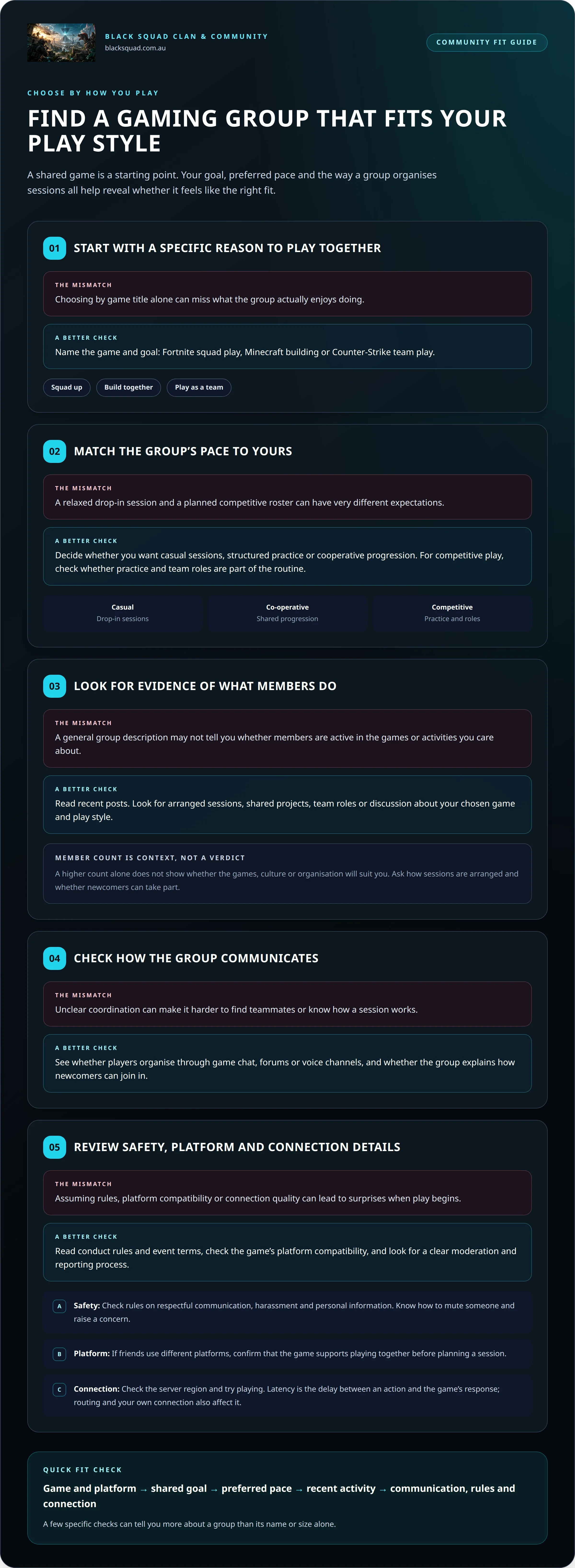
- Choose a group by its games, play style and preferred way of organising, not just its name or size.
- Learn what club membership can involve and how to judge whether a group’s structure suits you.
- Find practical ways to connect with players around shared interests, from cooperative sessions to organised matches.
- Explore Black Squad’s Australian servers and community options to find a place to play with others.
Table of Contents
Australian and Oceanic gaming community
An Australian gaming community can connect gamers across PC, console and mobile, while Oceanic groups may bring together players across nearby regions. The right fit depends on the game, platform, play style, event rules and server location.
Communities for PC, console and mobile gamers
Start with the game and platform you use. PC groups may organise around titles such as Counter-Strike: Source or Minecraft, while console players often seek squads for a specific game and mode. Mobile communities may focus on team matches or regular group play. Before joining, look for discussion about your chosen title, platform compatibility and clear ways to find teammates. If friends use different platforms, confirm that the game supports playing together before planning a session.
Rules and age restrictions
There isn’t one age limit for every Australian gaming group or esports event. Requirements can depend on the game’s classification, platform account terms, community rules and event entry conditions. Black Squad clan membership has a minimum age of 15. This is a clan eligibility requirement, not a universal age rule for Australian gaming communities. Read the specific event terms too, especially when a younger player plans to take part.
Safety, moderation and toxic behaviour
Look for written conduct rules, moderators who respond to reports and clear steps for handling disruptive behaviour. In a voice channel, for example, members should know how to mute someone and where to raise a concern. Check that the rules address harassment, personal information and respectful team communication. Keep account details private, use platform safety tools and follow the community’s reporting process instead of escalating an argument in chat.
Latency and server location
Latency is the delay between an action and the game’s response. A server hosted closer to Australian players can reduce the distance data travels, which may make real-time play feel more responsive. Network routing and your own connection also affect the result. In a competitive Counter-Strike match, delay can affect how quickly shots and movement register; in a cooperative Minecraft session, it may be less noticeable. Check the server region and try playing to assess the connection for yourself.
Gaming clubs and member counts
Club size offers some context about how a group is organised, but it doesn’t show whether its games or culture suit you. Gaming clubs range from smaller rosters to larger communities. Look beyond the count at the games members play, recent activity and how newcomers can take part. These details are more useful when deciding whether the group suits you.
Membership costs and event fees vary by club or event. Read the terms before joining to understand whether participation costs anything and what any fee covers. Don’t assume that a club’s size or competitive focus tells you what it charges.
The clubs named here illustrate the range of reported member counts:
- Never Really Dead has 16 members.
- ▽ H₂O ▽ Water Boys has 23 members.
- Desert Foxes has 30 members.
- Multinational Armor Division has 35 members.
- GALA has 49 members.
- Vanguards has 62 members.
- Highly Trained Amateurs has 64 members.
- Foys has 69 members.
A higher count doesn’t necessarily mean better organisation or teammates who suit you. A smaller club may have a close-knit roster, while a larger one may bring together players with varied interests. Ask which games members play, how they arrange sessions and whether newcomers and casual players can join in. Those answers reveal more than the total alone.
To find players who share your interests, search community forums and group directories using your game and preferred platform. Look for discussions about activities such as Minecraft building or Counter-Strike team play. Read recent posts to understand the group’s style, then follow its joining steps. If meeting in person matters to you, look for information about face-to-face events as well as online play.
Before joining, compare the club’s expectations with your availability. A competitive roster may coordinate practice and matches, while a social group may focus on relaxed sessions. Review the conduct rules, communication channels and event details. A good fit can help you find a regular squad without relying on member count alone.
Social gaming and shared interests
Yes. Australian players can look for groups centred on Fortnite, Minecraft or Counter-Strike. The best match depends on more than the game title: members may prefer ranked matches, relaxed sessions, building or cooperative objectives. Someone seeking coordinated Fortnite squads has different needs from a player looking for casual creative play. For Minecraft, ask whether the group focuses on survival, building or shared projects. In Counter-Strike, check whether players prefer competitive teamwork or community modes.
Shared interests can shape what members do beyond individual matches. A group might plan a themed Minecraft build, play a cooperative survival session or practise Counter-Strike tactics. Look for recent conversations about these activities, not just a general group description. Discussion about builds or team roles can help you see whether members approach the game in a way that suits you.
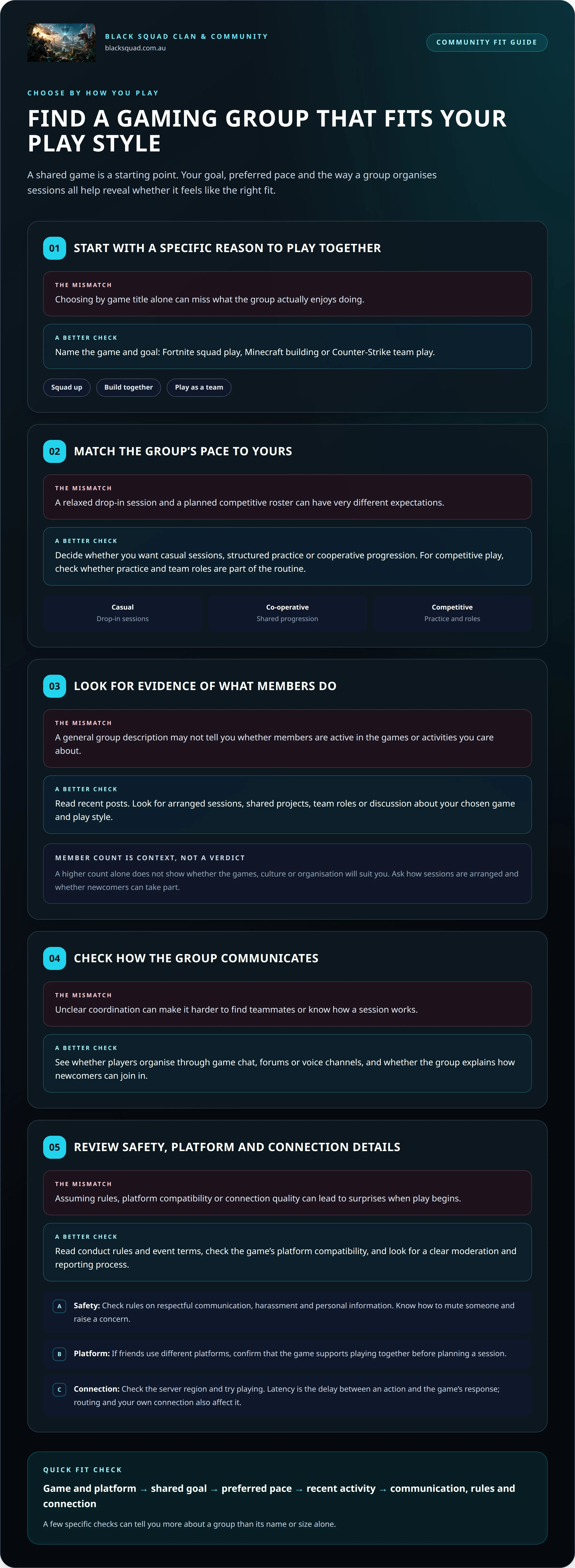
Try these steps to find a good social fit:
- Choose a game and a clear goal, such as Fortnite squad play or Minecraft building.
- Decide whether you want casual sessions, structured practice or cooperative progression.
- Read the group’s recent posts to see which activities members arrange.
- Check how players coordinate, such as through game chat, forums or voice channels.
Play style can matter as much as skill. Casual players may prefer drop-in sessions, while competitive players may value planned practice and defined team roles. For Counter-Strike, discuss communication and preferred match formats before joining a regular squad. For Minecraft, agree on a project and how members will contribute. Clear expectations make shared play smoother and help newcomers understand how the group operates.
You don’t have to start by joining a formal club. A forum discussion about a Fortnite mode, Minecraft project or Counter-Strike match can be an easy way to meet players. Introduce your game, platform and play style, then suggest a specific activity. An invitation to work on a build or practise a map gives others a clear way to respond.
Which gaming communities in Australia are best for PC, console, and mobile gamers?
The best fit is a group built around your platform, games and preferred way to play. Australian PC gamers can look for communities centred on Counter-Strike: Source, Minecraft, 7 Days to Die or Rust. Console players may prefer game-specific squads for coordinated matches, while mobile gamers often find teammates through a title’s in-game social features. Start with the games you play, then consider how each group connects members.
For PC play, look for groups that discuss the same edition and play style. Minecraft Java Edition and Bedrock Edition are separate options, so identify yours before joining a server or arranging a shared build. Counter-Strike players might prefer team-based matches or free-for-all modes, where each player competes independently. For survival games such as 7 Days to Die, ask whether members focus on cooperative building, resource gathering or defence.
Console communities often organise around a particular game, platform and mode. A Call of Duty group, for example, might focus on multiplayer or co-op. When introducing yourself, say which title and mode you play, then ask how the group arranges sessions and whether it welcomes casual players or expects regular participation.
Mobile groups may organise through in-game guilds, team features or community chats. Check that the group plays your title and suits your preferred pace. Someone looking for relaxed sessions may not enjoy a roster focused on scheduled competitive matches. Ask how the group welcomes newcomers and coordinates team communication.
Use this short checklist to narrow your options:
- Name your platform, game and preferred mode in your introduction.
- Check whether the group’s discussions match your play style.
- Confirm the edition or title before making plans with teammates.
- Read its joining and conduct rules before participating.
If you play on PC and want Australian-hosted games, compare available titles and modes with what your group wants to play. Start with a shared game, compatible platform and a clear way to team up.
Black Squad Clan & Community
Black Squad Clan & Community gives Australian players a place to connect around shared games, find teammates and take part in community play. It suits players looking for more than a one-off match, whether you prefer relaxed sessions or organised competition.
Our community brings together game discussions, community servers and events. In Counter-Strike: Source, players can choose GunGame Free-for-All (FFA), where everyone competes independently, Hardcore RPG or Zombie Riot + RPG. These modes offer different ways to play within one community, alongside servers for other games.
Use the forums to discuss games, meet players with similar interests or get server support. Check the live Events page for confirmed events. To explore the Australian gaming community at Black Squad Clan & Community, create an account on the website and join the conversation.
Choose your next shared session
When introducing yourself, name a game, your preferred play style and what you hope to find. You might want a regular squad, a relaxed co-op session or teammates for organised competition. A clear introduction gives other players something specific to respond to and starts the conversation on common ground.
As you explore an Australian gaming community, notice how members communicate and include newcomers. A welcoming first session can help you decide whether the group’s pace, expectations and interests suit you. You can get to know the community before deciding whether to make a longer-term commitment.
Ready to take that step? Contact Black Squad Clan & Community to start a conversation about finding your place among Australian players. Bring your favourite game and the way you like to play; there’s room to build your next gaming connection from there.
Frequently Asked Questions
What are the biggest gaming communities and forums in Australia?
There’s no single reliable way to rank Australian gaming communities by size, and member totals don’t reveal how active or welcoming a group is. Compare recent discussions, games, events and ways to connect. Black Squad’s forums bring together game discussions, member connections and community topics, giving you a place to explore if you’re looking for an Australian gaming community.
Where can Australian gamers find local gaming events, LAN parties, and conventions?
Search community forums and group directories using your game and platform. Read recent posts to see what members play and organise, and look for information about in-person meet-ups if those matter to you.
What are the best Australian gaming communities for beginners, families, or underrepresented gamers?
Look for clear conduct rules and signs that newcomers and casual players are welcome. Recent discussions can help you judge whether the group’s games and play style suit you.
Article by
Black Squad Clan & Community
Black Squad is an Australian gaming clan and community with roots going back to around 2005. We run Australian community game servers and bring casual and competitive players together through our forums, squads and events. We share server guides, community updates and practical tips to help players get connected, find teammates and get more out of playing together.